
Grinding is a sophisticated machining process. The dynamic balance level of the grinding wheel mounted on the spindle exerts a noticeable impact on the finished surface finish of workpieces. We carried out a targeted test to intuitively analyze how grinding wheel dynamic balance affects workpiece surface roughness.
Influence of Grinding Wheel Dynamic Balance Value on Workpiece Surface Roughness after Grinding
Test Configuration
- Machine Tool: Horizontal Spindle Rotary Table Surface Grinder
- Grinding Wheel: 14A1 350×127×10×30×40T, 80 grit CBN grinding wheel
- Workpiece: Heat-treated steel plate with outer diameter Φ350, material grade 75Cr1
Grinding Process Parameters
- Spindle rotational speed: 1800 RPM
- Infeed mode: 0.005 mm infeed on each side
- Rough grinding feed rate setting: 10
- Finish grinding feed rate setting: 7
- Each workpiece undergoes 50 rough grinding passes followed by 4 finish grinding passes, then surface roughness is measured
Inspection Instruments
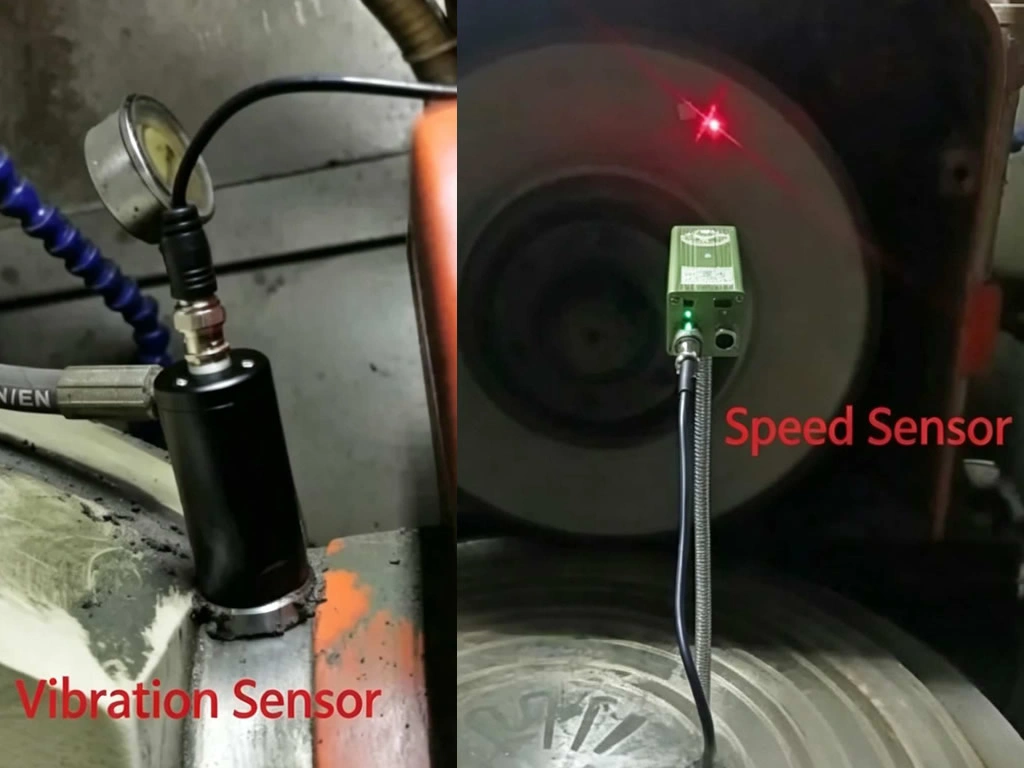
- Zheda portable online dynamic balancer
- Mitutoyo surface roughness tester
Test Results
- When dynamic balance vibration amplitude = 0.35 mm/s, post-grinding workpiece roughness Ra = 0.806
- When dynamic balance vibration amplitude = 0.04 mm/s, post-grinding workpiece roughness Ra = 0.607